I spend a lot of wedding mornings in a bridal suite with a curling iron in one hand, half-listening to a best man mutter his speech into his phone in the hallway while I'm working on the maid of honor's hair. Marco's spent years mixing audio for live rooms, so between the two of us we've developed strong opinions about pacing, timing, and which lines actually get a laugh versus a polite exhale. These ten, pulled from a longer set of seventeen, are the ones I'd actually keep if I only had room for one or two.
The Opening Line That Sets the Tone
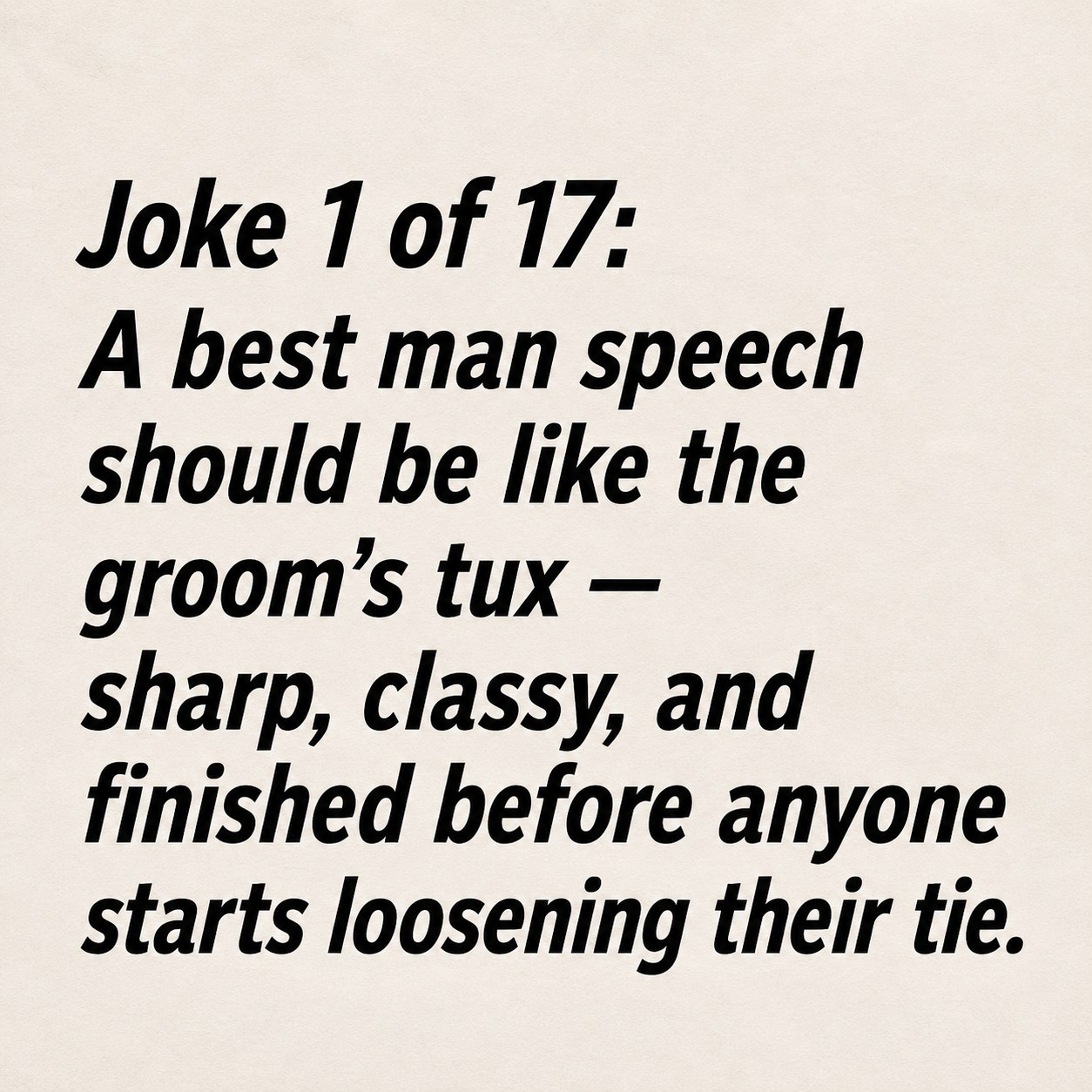
This is the joke you use in the first thirty seconds, before anyone's decided whether you're going to be good at this. Comparing the speech to the groom's tux — sharp, classy, done before anyone loosens their tie — does two jobs at once: it's funny, and it's a promise. You're telling the room you know a good speech has an end point.
I've stood next to enough grooms getting their hair combed down five minutes before a ceremony to know the room appreciates efficiency almost as much as humor. Say this line, get the laugh, and don't linger on it — the joke works because it undersells itself.
- Best for: the very first line, before any story
- Delivery: flat and quick, like you're not trying that hard
- Skip it if: your speech is already running long — it sets an expectation you then have to meet
The Toast You Customize With Real Names
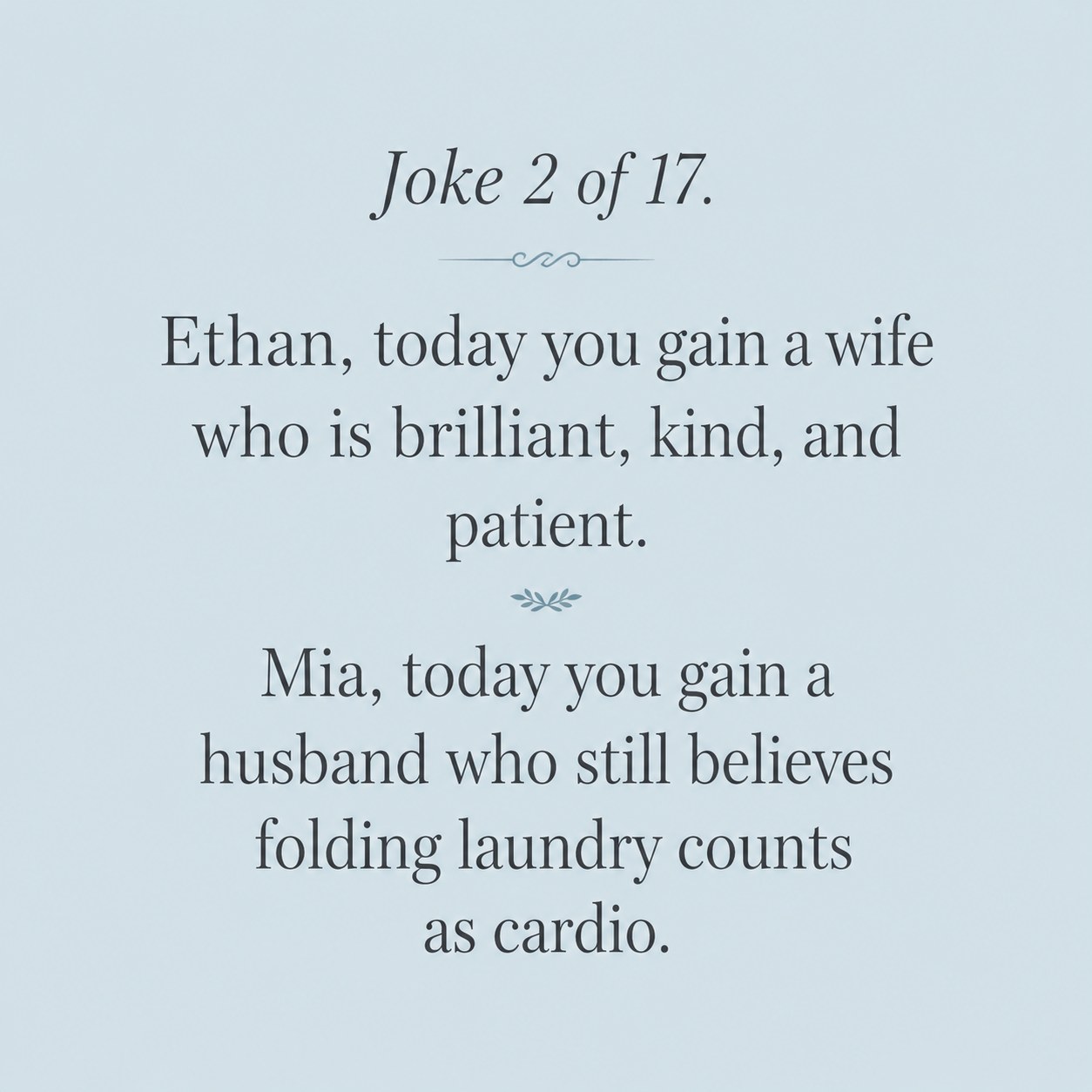
Template jokes like this one — she gains a partner who's brilliant and patient, he gains a partner who thinks folding laundry is cardio — only work if you actually do the work of swapping in real, specific details. Generic names read as generic. A real inside detail about how he actually procrastinates, or what she actually tolerates, turns a fill-in-the-blank joke into something that sounds written for these two people.
I tell clients the same thing about a reference photo they bring me for a haircut: it's a starting template, not the finished thing, until you adjust it to what's actually true for the person in front of you. Same principle here.
- Swap in: one specific, true detail about each of them
- Keep: the structure — gain/gain, contrast between something admirable and something small and human
- Timing: works well mid-speech, right before you move into a toast
The Story-Format Joke: The Alarm
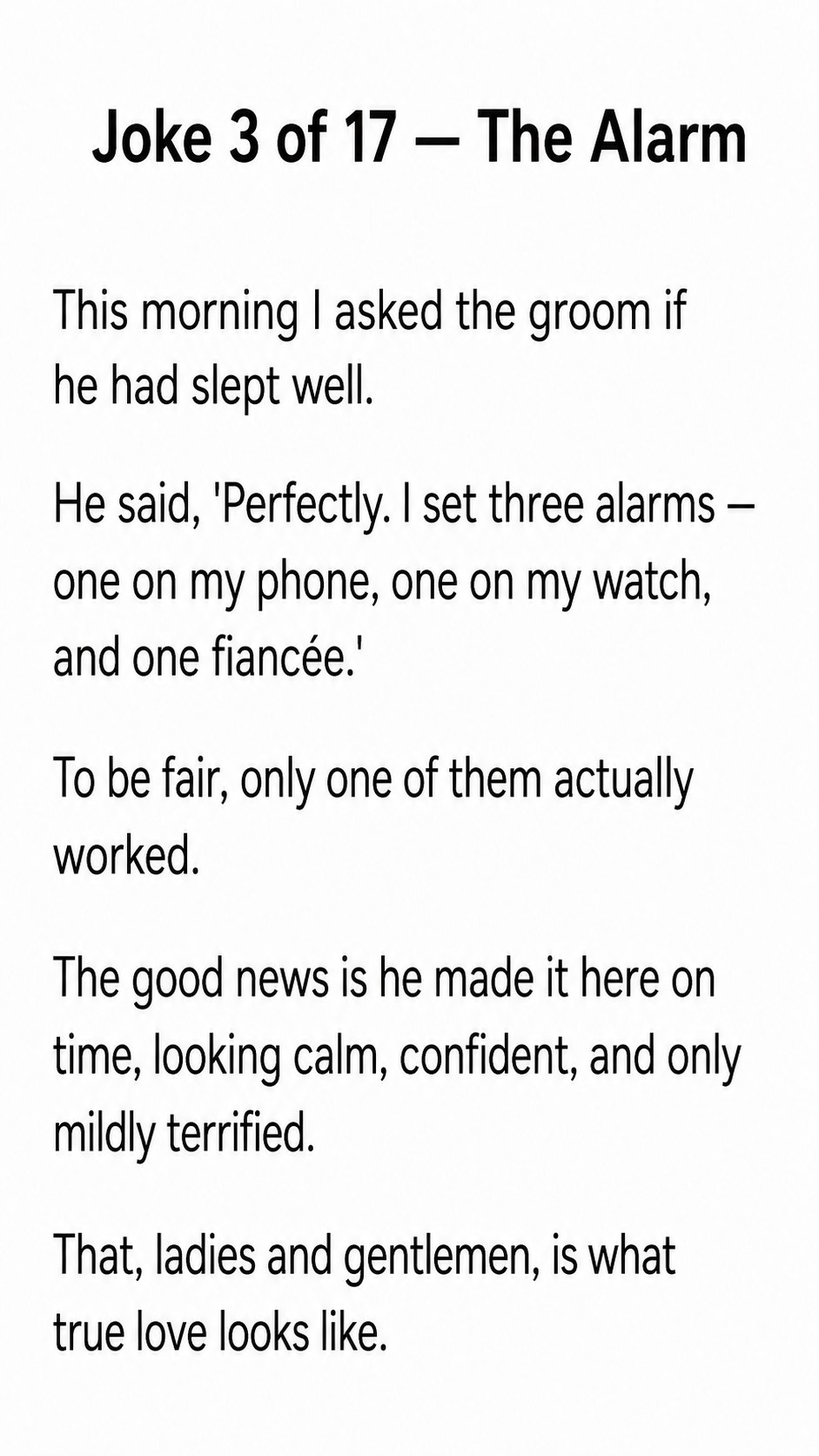
This one's a different animal — it's a mini-story, not a one-liner, and it needs a beat of quiet before the punchline lands. Three alarms, one of them a fiancée, only one that actually worked. The setup takes longer, the room has to follow you for four sentences, but the payoff is bigger because you earned it.
The jokes that get the loudest laugh in a room are almost never the shortest ones — they're the ones where the room trusts you enough to wait for the ending.
If you use a story-format joke, practice the pause before the last line out loud, at home, more than once. The silence right before "that, ladies and gentlemen, is what true love looks like" is doing half the work.
The Self-Deprecating Opener That Buys You the Room
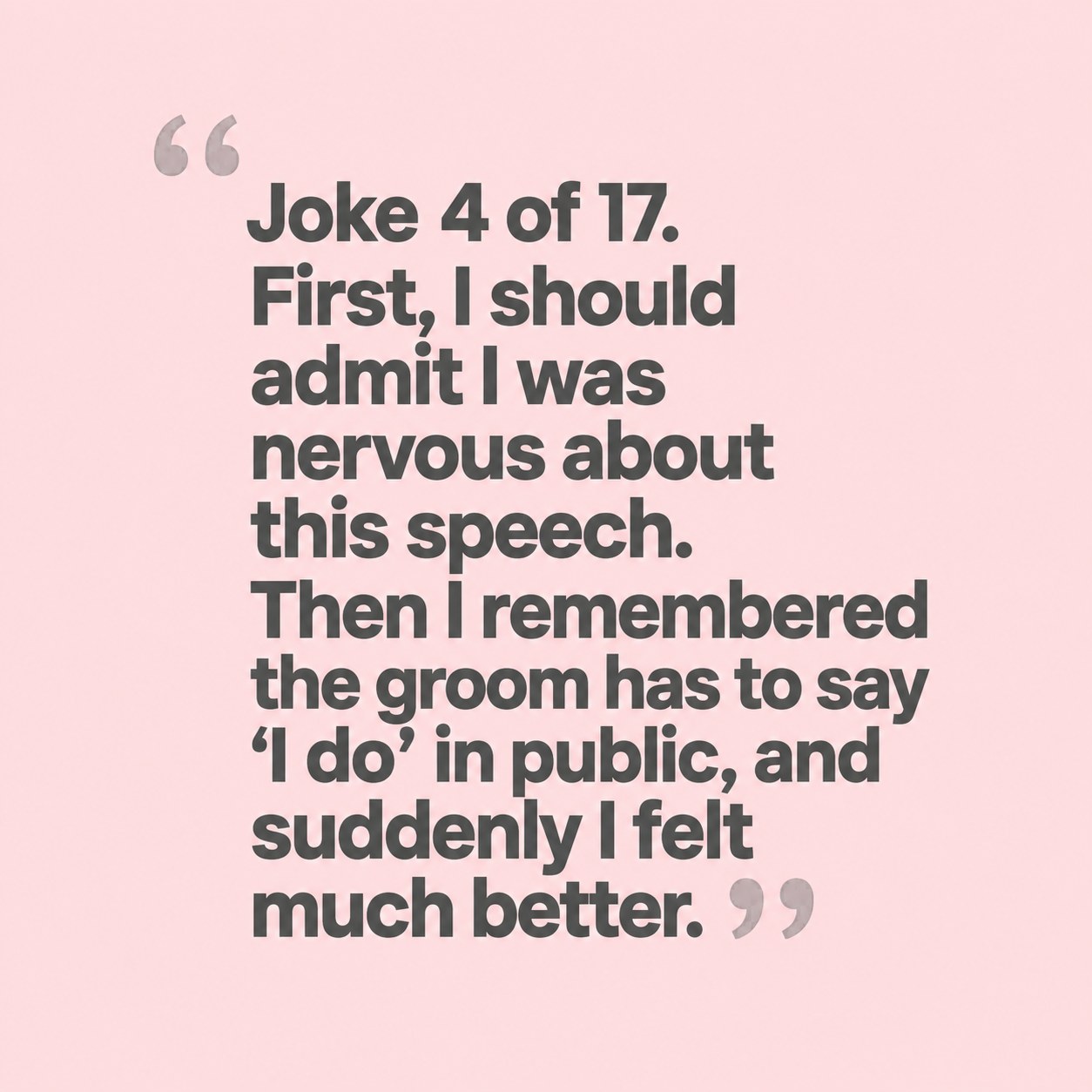
Admitting you were nervous, then pivoting the nerves onto the groom, does something specific: it makes you likable in the first ten seconds without asking the room to laugh at anyone but yourself first. That's the safest kind of funny there is, and it works whether you're a natural performer or someone who's never held a microphone in your life.
What to say if you're actually shaking: use this line as your literal first sentence, then breathe. The laugh gives you a few seconds to find your footing before the real material starts.
- Works for: anyone nervous, especially first-time speech-givers
- Placement: line one or two, before you've said anything else
- Why it holds up: the joke's target is the groom's public vulnerability, not yours, so it flatters him too
Why Use One, Not All Seventeen Is the Whole Game
Every wedding I've done hair for has had at least one best man who printed out every joke he could find and tried to use all of them. It never lands the way he hopes. A speech isn't a comedy set — it's a toast with a few good laughs in it, and the difference matters.
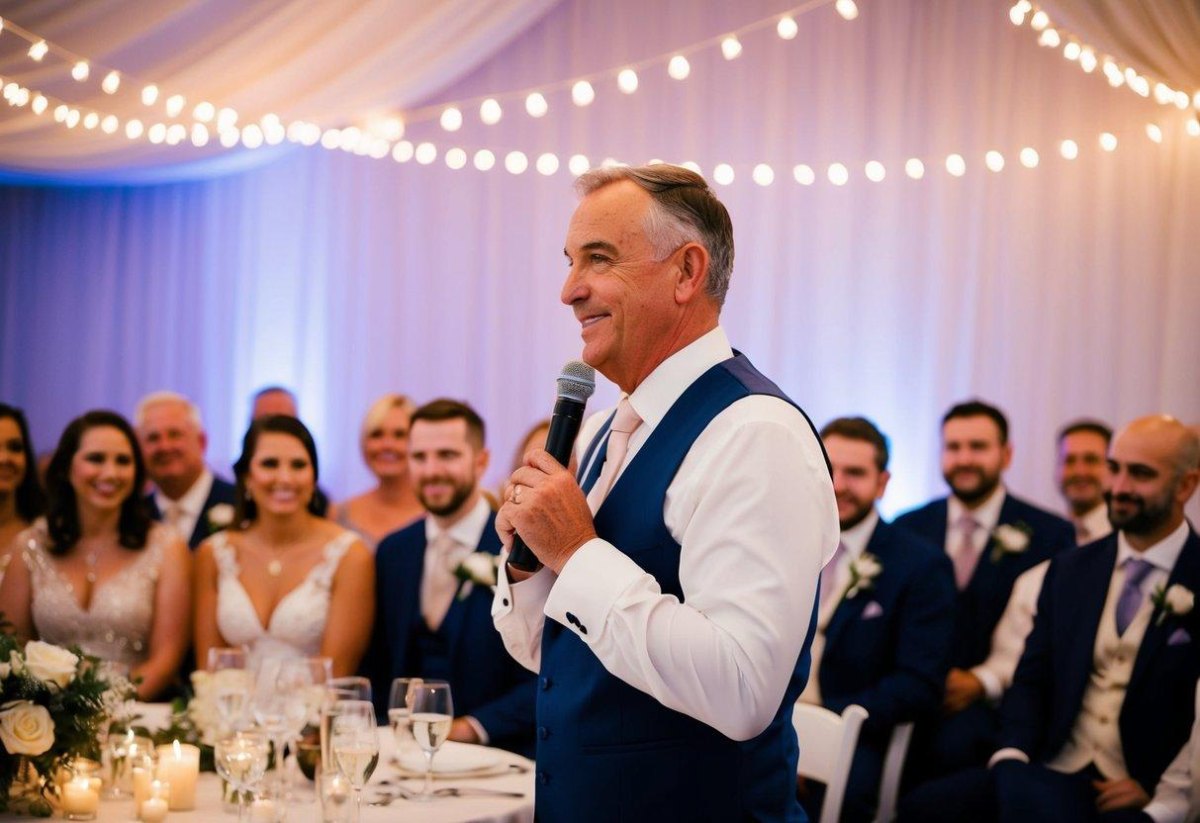
The math is simple: a wedding speech runs three to five minutes at most. That's room for one strong opener, one story, and one closing line — three jokes, not seventeen. Every extra joke you cram in dilutes the ones that were actually working, and it eats time the room wanted spent on the couple, not the material.
Pick your favorites, cut the rest without guilt, and trust that restraint reads as confidence.
Picking the Right Opener for the Room You're Actually In
Seventeen openers exist because seventeen different rooms exist. A best man speaking to a crowd of college friends and one to a room heavy with grandparents and coworkers need different first lines, and reading that room correctly before you write a single word matters more than finding the funniest joke on the internet.
Ask yourself who's actually sitting in front of you before you pick:
- Mixed generations, lots of family: go warmer and gentler, save the edgier lines for the toast among friends afterward
- Mostly friends your own age: you have more room to be sharp, self-deprecating, even a little irreverent
- Unsure of the room: default to the safest, most universal opener — you can always earn bigger laughs later once you've read the crowd
The Universal One-Liner Everybody Laughs At
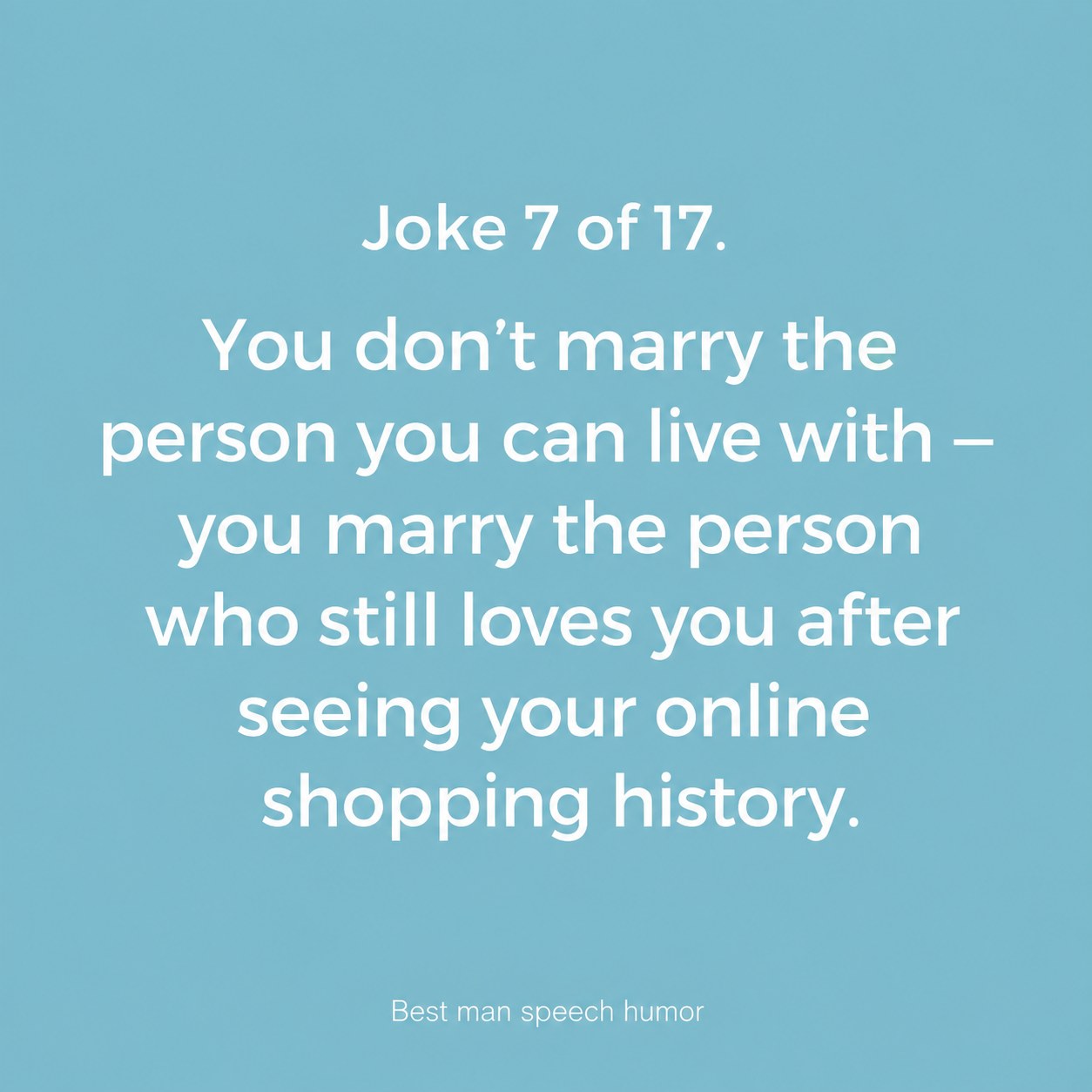
This is your safety net line — the one that doesn't depend on knowing anyone in the room, doesn't reference an inside story, and still gets a genuine laugh because it's true for basically every couple sitting at every table. You don't marry the person you can live with, you marry the person who still loves you after your shopping history — everyone's spouse has seen that receipt.
I'd use this one mid-speech, right after a more personal story, as a breather before you move toward the sentimental close. It works precisely because it needs zero setup and zero knowledge of the couple — it's the joke you fall back on if a more specific one you tried earlier gets a quieter response than you hoped.
When You're the Brother, Not the Best Friend
Speaking as the groom's brother changes what's actually available to you. You've got childhood material a best friend doesn't — but you're also standing in front of your own parents, which puts a real ceiling on how far you can push it. The version of you at nine years old is fair game; anything from the last messy breakup or a story your mother's never heard is not.
I've watched enough family weddings to know the brother speech that gets remembered fondly is the one that mixes a genuinely embarrassing childhood detail with a line about how proud he is now — not the one that tries hardest to be edgy in front of grandma.
- Safe territory: shared childhood, sibling rivalry, "I knew this day would come"
- Off-limits: exes, past relationships, anything your parents haven't heard yet
The Line About the Friends Group
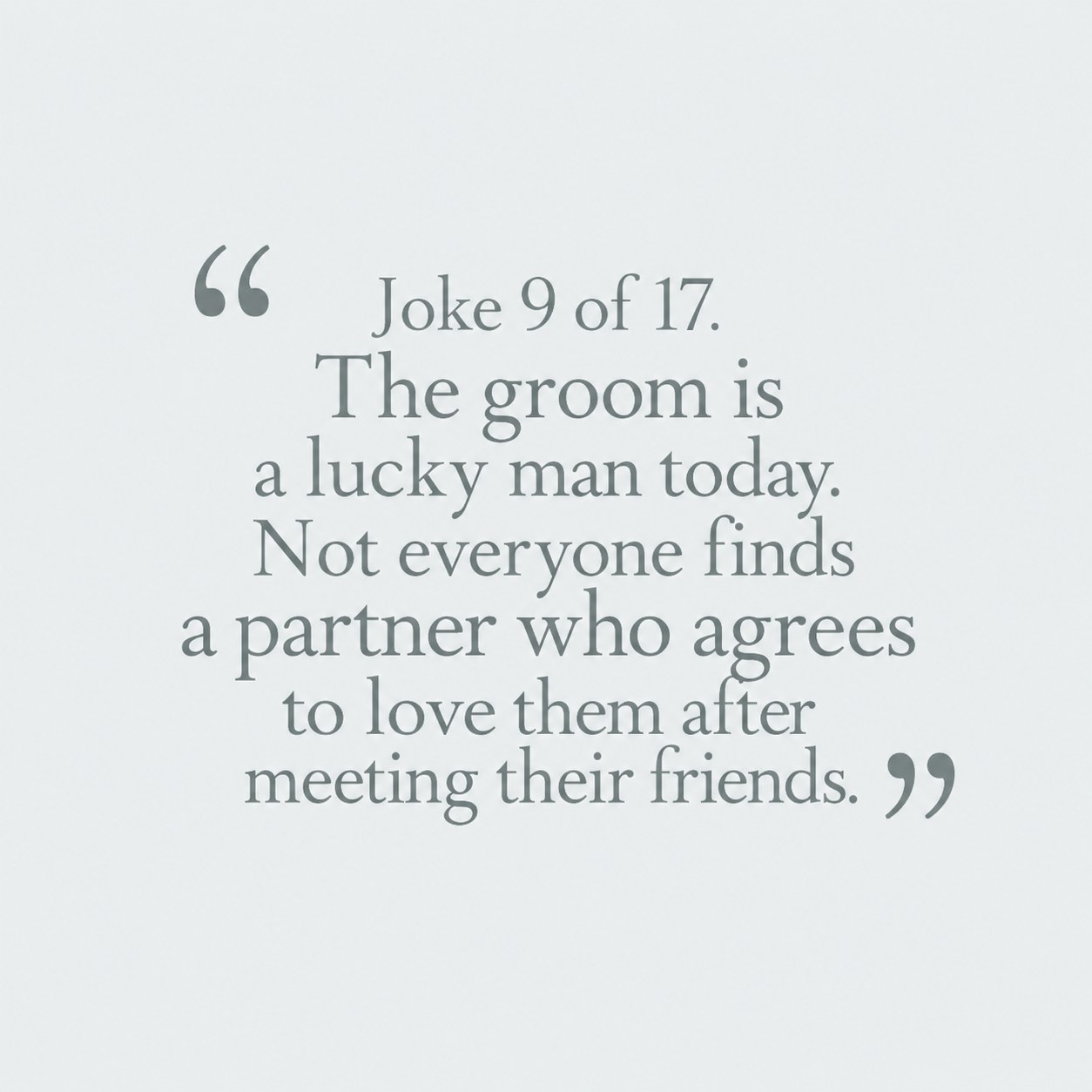
Jokes that reference "the friends" instead of one specific friend are useful because they hit a middle ground — specific enough to feel personal to the couple, general enough that guests who don't know the friend group still get the joke. Not everyone finds a partner who agrees to love them after meeting their friends works on almost any crowd, because everyone in the room has met a rough friend group at least once.
Where I'd be careful: if you're tempted to swap "friends" for one particular friend's name as an inside joke, ask yourself first whether that friend is actually in the room and whether they'll laugh along or wince. The universal version is funnier to strangers; the specific version is funnier to the four people who lived it. Pick based on who's actually seated at the tables.
Ending Heartfelt, Not Just Funny
The best speeches I've heard from the sidelines of a bridal suite all do the same thing at the end: they stop being funny on purpose. You've earned the room's attention with a few good jokes — now spend the last thirty seconds actually saying something true about the couple. That's the part people remember a year later, not the punchline.
Wedding-safe means: no exes, no inside jokes half the room won't get, nothing that needs an apology afterward. Funny and heartfelt aren't opposites — the transition between them is just a change in your own tone, slower and quieter, right before you raise your glass.
None of these are meant to be used all at once, and that's really the whole point — the best speeches I've overheard getting rehearsed in hallway mirrors were the shortest ones with the most restraint. Pick two, practice the pause before the punchline, and let the last line be the one that's actually true.


Frequently Asked Questions
How many jokes should actually go in a best man speech?
Two or three at most. A wedding speech runs three to five minutes, and every extra joke you add takes time away from the parts guests actually remember — the sincere toast at the end.
Is it okay to use a joke I found online word for word?
It's fine as a starting point, but swap in one real, specific detail about the couple before you deliver it. A template joke with a true detail added sounds written for them; the same joke unedited sounds like everyone else's speech.
What if I'm the groom's brother and not his best friend?
Lean on childhood stories instead of adult ones, and keep anything about past relationships off the table entirely — your parents are in that room, and that material isn't worth the wince.
What's the safest joke if I can't read the crowd yet?
A universal one-liner that doesn't reference the couple's specific history — something everyone in a marriage relates to — is the safest opener when you genuinely don't know who's in the room.